By Pamela Thompson October 14, 2025
The relationship between companies and customers is changing more quickly than ever in the retail and service industries of today. Transactions are now more than just exchanging money for products or services; they are chances to interact, comprehend, and create enduring relationships.
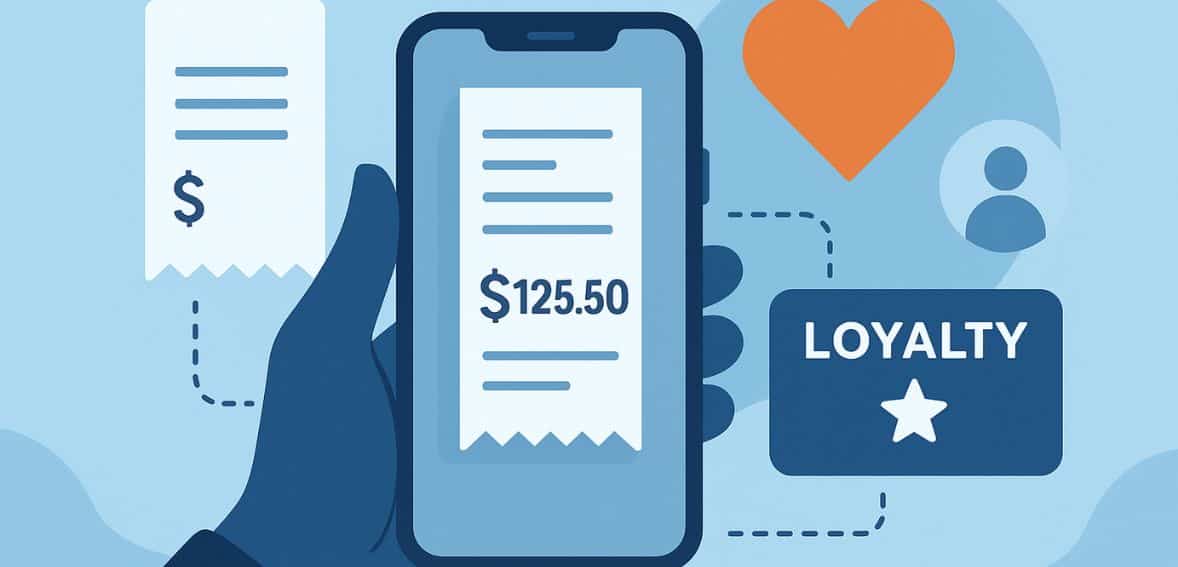
Digital receipts and loyalty integration have become increasingly potent tools as technology develops, enabling companies to transform routine transactions into meaningful exchanges. Retailers can use these tools to reward loyalty, personalize experiences, and collect data that was previously impossible with paper receipts.
Integrating digital receipts with loyalty programs meets the convenience, relevance, and recognition expectations of today’s consumers while fostering enduring relationships with them.
The Evolution of Transactions

The way businesses engage with customers is changing quickly in today’s fast-paced retail and service environment. Transactions now offer chances to create enduring relationships rather than just exchanging money for goods or services.
At the forefront of this change are digital receipts and loyalty integration, which give businesses the capacity to interact, understand, and keep consumers in ways that were previously impossible with traditional receipts.
By utilizing technology, these tools bridge the gap between purchases and customized experiences by transforming ordinary transactions into meaningful interactions. In the end, this integration turns the customer journey from discrete interactions into an ongoing relationship.
Consumer-Driven Adoption of Digital Receipts
Both customer demand and corporate efficiency are driving the adoption of digital receipts. Convenience, customization, and sustainability are expectations of today’s customers. Once thought to be standard, paper receipts are now viewed as inconvenient and harmful to the environment.
By sending instant transaction confirmations straight to a customer’s email or mobile device, digital receipts address these problems. They provide access to a multitude of consumer insights in addition to convenience.
Every digitally recorded purchase can be monitored, examined, and used to inform marketing plans. Companies are able to understand the frequency, preferences, and patterns of purchases, which serve as the basis for customized engagement and loyalty programs.
Unlocking Data Insights
Digital receipts offer advantages beyond loyalty and ease of use. They provide enterprises with powerful data collection tools. Digital transactions can record finer characteristics like product preferences, frequency of purchases, and time, while traditional receipts provide very little information.
Predictive analytics is powered by this data, which helps companies foresee client demands and create focused advertising efforts. This increases client retention and engagement rates by enabling personalized offers based on past behavior.
Additionally, data-driven insights aid in waste reduction, demand forecasting, and inventory optimization, guaranteeing effective operations and great customer satisfaction. As a result, each deal turns from a simple sale into a strategic asset.
Enhancing Customer Convenience
Digital receipts remove common issues with paper receipts from the customer’s point of view. The problem of receipts being misplaced, damaged, or lost has been effectively eliminated. Because digital records can be readily retrieved, returns and exchanges become easier.
Convenience is further increased by connection with mobile wallets or applications, which give users a single interface to track transactions, use loyalty points, and get tailored promos.
This simplified method helps create a seamless purchasing experience, which is becoming more and more important in modern retail. Customers’ emotional bond with the brand is stronger when they see convenience as a component of the purchase, transforming ordinary transactions into memorable ones.
Building Trust through Security

Adoption of digital receipts depends heavily on security and privacy. Businesses should ensure that their platforms follow PCI DSS-compliant security standards, including encryption, secure storage, and safe transaction processing, to preserve customer trust.
Customers are more inclined to participate in loyalty programs and disclose personal preferences when they are assured that their information is secure. Brand reputation is also improved by data usage transparency.
Retailers get a competitive edge when they are transparent about how loyalty integration and digital receipts enhance the consumer experience without sacrificing privacy. In fostering enduring relationships, trust turns into a currency with the same value as points or discounts.
Supporting Sustainability Goals
It is impossible to overstate the impact that digital receipts have on the environment. Every year, retailers produce millions of paper receipts, which adds to pollution, waste, and deforestation. Digital substitutes significantly cut down on paper use, promoting sustainability objectives and attracting mindful customers.
Companies may highlight their environmental stewardship, transforming each transaction into an act of social responsibility. Consumers are choosing businesses that share their beliefs more and more, and sustainable business practices offer another emotional bond. In addition to enhancing the customer experience, integrating digital receipts with reward programs conveys company values, which strengthens trust and loyalty even more.
Accessible Technology for All Businesses
Businesses of all sizes can now integrate digital receipts and loyalty programs because of technological advancements. These days, point-of-sale systems frequently include features for loyalty monitoring and automated digital receipts. Mobile apps and cloud-based platforms make management and analysis easier.
Despite their previous reliance on paper systems, small and medium-sized businesses can today compete with larger chains by providing individualized, data-driven services. Technology democratizes interaction by enabling any company to use smart digital tools to turn transactions into relationships. This accessibility promotes ongoing development of customer experience initiatives and increases competition.
Real-Time Marketing Opportunities
Real-time marketing opportunities are also made possible by digital receipts. Businesses can provide tailored offers within hours or even minutes of a purchase by instantly evaluating transaction data. For example, depending on purchasing trends, a client who purchases coffee might be eligible for a discount on a pastry that same week.
This quickness demonstrates attention to consumer behaviour and reinforces the relevance of marketing communications. Because customers believe the brand values their business and understands their preferences, real-time involvement enhances the possibility of return visits. As a result, each transaction serves as a touchpoint for continuing communication and relationship development.
Personalization at Scale
The key to a successful loyalty integration is personalization. With digital receipts, companies can personalize offers, incentives, and messages based on each customer’s past purchases. Whether it’s recognizing a particular occasion, a recent purchase milestone, or a favourite product, customers value attention to detail.
Personalized interactions strengthen brand loyalty and set the company apart from rivals. Tailored offerings reinforce the customer’s impression of value by feeling relevant and considerate, in contrast to generic promotions. Digital receipts develop into avenues of communication that foster sustained engagement and loyalty, going beyond simple confirmation.
Multi-Channel Consistency
The key to a successful loyalty integration is personalization. With digital receipts, companies can personalize offers, incentives, and messages based on each customer’s past purchases. Whether it’s recognizing a particular occasion, a recent purchase milestone, or a favourite product, customers value attention to detail.
Personalized interactions strengthen brand loyalty and set the company apart from rivals. Tailored offerings reinforce the customer’s impression of value by feeling relevant and considerate, in contrast to generic promotions. Digital receipts develop into avenues of communication that foster sustained engagement and loyalty, going beyond simple confirmation.
Operational Efficiency and Accuracy

Digital receipts provide operational benefits for stores that go beyond consumer interaction. Employee time, printing expenses, and human mistakes related to manual receipts are all decreased with automated issuing.
Accurate audit trails are obtained by businesses, which helps with accounting, refunds, and compliance procedures. Batch reporting and analytics are made possible by digital technologies, which enhance forecasting precision and decision-making.
These efficiencies free up funds for key projects like product development, tailored marketing campaigns, or improvements to loyalty programs. Technology simultaneously increases internal efficiency and external satisfaction through improved customer interactions and operational savings.
Insights for Strategic Decisions
Long-term consumer insights are also fostered via digital receipts. Trends, including purchasing cycles, high-demand products, and seasonal preferences, are shown by aggregated data. Marketing plans, promotional tactics, and inventory management are all influenced by this information.
When combined with information from loyalty programs, companies are able to determine which of their clients are the most valuable and adjust their retention strategies appropriately. High-value clients may be eligible for special discounts, early access to sales, or personalized messages.
Businesses can develop proactive strategies that go beyond one-time purchases into continuous relationship management by examining the relationship between transactions and loyalty engagement.
The Power of Instant Rewards
One should not undervalue the psychological impact of immediate reward recognition. Positive behaviour is reinforced when clients receive a digital receipt showing that loyalty points have been quickly added to their account. This instant satisfaction promotes recurring purchases and fortifies the development of brand engagement habits.
Traditional manual or delayed loyalty tracking frequently falls short in this regard. Digital integration increases happiness and fosters emotional commitment in the brand by making reward recognition concrete and quick. The customer’s relationship with the company is strengthened as each transaction turns into a positive reinforcement moment.
Gamifying Loyalty Engagement
Additionally, digital receipts make it easier to gamify loyalty programs. Companies can engage clients in ways other than point accumulation by introducing challenges, milestones, or tiers of accomplishment. For instance, reaching a specific number of purchases in a given month could grant access to special advantages or incentives.
The digital receipt makes participation easy and inspiring by acting as a record and confirmation of progress. Gamified loyalty programs increase engagement by leveraging human psychology, which promotes achievement, competition, and recognition. Routine shopping is turned into an engaging, relationship-driven journey where each transaction is a step toward a bigger experience.
Optimizing Promotional Strategies
Retailers can improve their promotional strategy by using digital receipt analytics. Businesses may maximize the impact of campaigns by analyzing which offers result in more engagement or repeat purchases. Customer segments can be targeted with seasonal promotions, product recommendations, and special prizes to increase their relevance and efficacy.
Loyalty integration strengthens brand loyalty by making sure that consumers feel appreciated and rewarded for their ongoing participation. Continuous development is made possible by data-driven insights, which turn every transaction into a chance to learn and strengthen relationships. Thus, digital receipts fulfill the dual purposes of analysis and relationships.
Multi-Brand Loyalty Programs
Multi-brand loyalty programs are also supported by digital receipts. Consumers frequently interact with several brands inside a single loyalty ecosystem, earning and using points from several partners. Integration raises perceived value by enabling each transaction to contribute to group benefits.
While preserving smooth tracking, shared loyalty schemes promote experimentation and cross-promotion. The required openness is offered by digital receipts, which guarantee that clients are aware of how each purchase affects their total rewards. In this sense, digital integration promotes cooperation, increases chances for interaction, and reinforces bonds between linked businesses.
Scalability for Growing Businesses

One important benefit of digital receipts and loyalty integration is their scalability. Digital systems can handle growing transaction volumes as firms expand without compromising accuracy or consumer satisfaction. Retailers can sustain individualized interaction at scale with the help of cloud-based technologies, automated tracking, and AI-driven insights.
Big datasets can be used to find trends, improve advertising tactics, and predict consumer demands. Technology guarantees that every transaction keeps adding significantly to the connection, maintaining the personal touch even in large operations, so scaling does not lower the quality of interactions.
Transforming Transactions into Relationships
In the end, loyalty integration and digital receipts reinterpret what a transaction is. Every purchase becomes a part of a continuous conversation between the brand and the customer rather than a one-time occurrence.
Relationships built on trust, fulfillment, and acknowledgment are produced by the convergence of data-driven insights, real-time engagement, personalized rewards, and seamless ease.
Consumers feel appreciated, companies obtain useful information, and loyalty becomes ingrained in all dealings. In this landscape, transactions serve as the cornerstone of durable connections that drive long-term success rather than being the final goal.
Conclusion
A paradigm shift in modern business is represented by the incorporation of loyalty programs and digital receipts. Adopting these technologies gives businesses a strategic edge in engagement, operational efficiency, and insight-driven decision-making, in addition to meeting changing customer expectations.
Every transaction becomes a chance to reward, customize, and deepen the relationship between the business and its customers. Retailers may build enduring relationships and encourage loyalty that goes well beyond a single purchase by carefully utilizing digital tools.
Digital receipts and loyalty integration transform routine transactions into enduring relationships that fuel corporate growth in a world where convenience, personalization, and connectivity are becoming more and more important.
FAQs
What are digital receipts?
Digital receipts are electronic versions of purchase receipts delivered via email, SMS, or apps instead of printed paper receipts.
How do digital receipts support customer loyalty programs?
They create a direct communication channel that can automatically link purchases to loyalty accounts, rewards, and personalized offers.
Why is integrating loyalty with digital receipts effective?
It turns routine transactions into engagement moments by reinforcing rewards, recognition, and ongoing value after each purchase.
Do customers prefer digital receipts over paper receipts?
Many do, especially when digital receipts are easy to access, searchable, and paired with relevant rewards or offers.
Can digital receipts improve long-term customer relationships?
Yes. By combining convenience with personalized loyalty messaging, digital receipts help businesses stay connected beyond the point of sale.
Leave a Reply